The best hybrid high schools in the U.S. combine flexible online coursework with regular in-person classes, offering students both academic freedom and face-to-face support — perfect for college prep and personalized learning.
After touring campuses, sitting in on online classes, and speaking with hybrid school leaders, I’ve learned one thing: the best hybrid high schools blend flexibility with community. In this guide, you’ll find U.S. programs that are accredited, high-performing, and trusted by parents nationwide.
You’ll quickly compare top programs, see who each school is best for, and find the right match for your teen.
Which Hybrid High School Is Right for You?
The best hybrid high school depends on your child’s learning style, academic goals, and need for flexibility—students who want rigorous academics, flexible schedules, or extra support will benefit from different programs.
Use this table to find your best-fit school in seconds:
| If your teen is… | Best-fit hybrid school | Why it works |
|---|---|---|
| Highly academic / aiming for top colleges | Stanford Online High School | College-level rigor, advanced peers, and discussion-based learning prepare students for elite universities |
| Needs flexible pacing (sports, anxiety, burnout) | Fusion Academy | Fully customized 1:1 classes let students move at their own pace without pressure |
| Budget-conscious but wants strong academics | ASU Prep Digital | Lower-cost option with accredited curriculum and optional in-person learning hubs |
| Wants college credits during high school | ASU Prep Digital | Dual enrollment allows students to graduate with real college credits |
| Self-directed / project-based learner | Khan Lab School | Mastery-based learning and independent projects reward curiosity and initiative |
| Needs academic recovery or extra support | Insight School of Washington | Flexible scheduling + support systems help students catch up and stay on track |
| Creative / humanities-focused student | The Nueva School | Strong emphasis on design thinking, creativity, and interdisciplinary learning |
| Globally minded / IB-focused student | Dwight Global Online School | International Baccalaureate program with global campus exposure |
| Career-focused (engineering, business, health) | Da Vinci Schools | Real-world pathways, internships, and career-connected learning |
| STEM-driven + competitive environment | BASIS Charter Schools | Intensive STEM + AP programs with strong test performance outcomes |
How to Use This Table:
If you’re unsure, shortlist 2–3 schools based on your teen’s situation, then compare
- Schedule flexibility
- Academic rigor
- Support systems
In my experience, the best choice isn’t the “top-ranked” school — it’s the one that matches your child’s learning style and daily routine.
What Most Parents Get Wrong
Many families choose based on reputation alone.
But hybrid schools vary massively in:
- How many days are actually in-person
- Level of independence required
- Support available when students fall behind
A mismatch here is the #1 reason students struggle.
Pro Insight:
If your teen
- Thrives with structure → pick schools with more in-person days
- Needs flexibility → go fully customizable (like Fusion-style models)
- Is highly driven → choose academically intense programs
What Exactly Is a Hybrid High School?
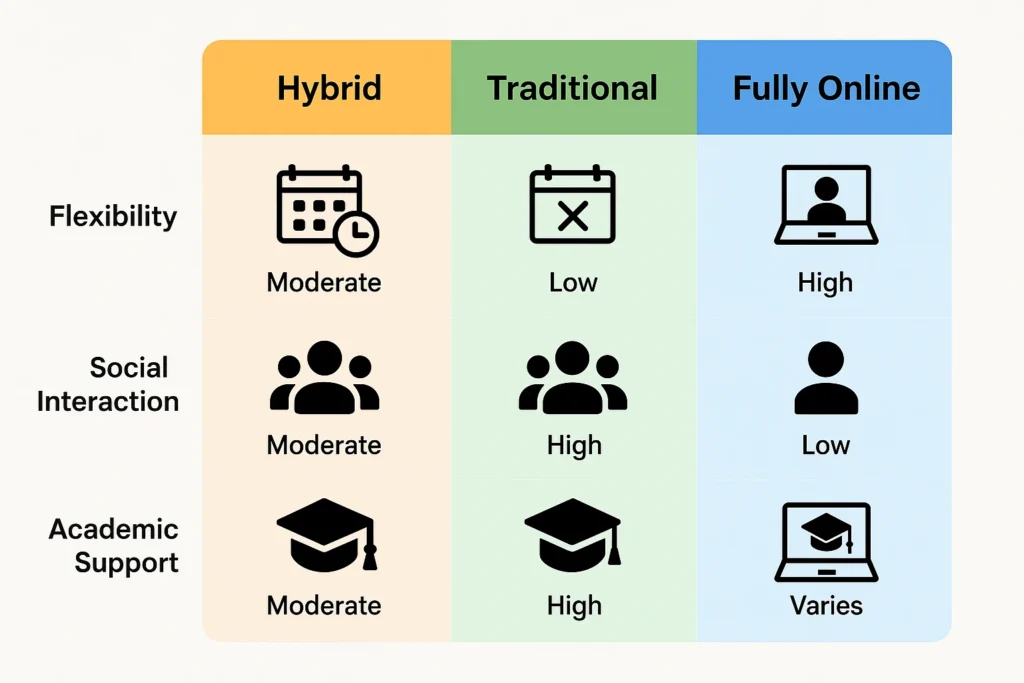
Hybrid High School Definition: A hybrid high school combines online learning with scheduled in-person classes, allowing students to study flexibly at home while still attending campus for instruction, labs, or social interaction.
Expansion:
Think of it like college-lite — your teen gets the freedom to learn from home part of the week, but still checks in for face-to-face classes, labs, or group projects.
This model is becoming popular because it offers flexibility without losing the social and hands-on parts of school life. Most hybrid schools follow a split schedule — for example, students might attend in-person classes three days a week and complete online lessons the other two.
Practical Benefits:
- Flexibility: Students can work at their own pace on remote days.
- Structure: In-person days keep them accountable and engaged.
- Customization: Schedules can adapt to AP courses, sports, or part-time work.
According to data from the U.S. Department of Education (ed.gov), hybrid programs can boost engagement for students who benefit from varied learning environments.
Similarly, the Home School Legal Defense Association notes that these models give families more options for customizing education (hslda.org).
Hybrid schools mix online flexibility with in-person support — but how does that compare to traditional schooling models? You might want to see how public, private, and homeschooling stack up before deciding.
10 Best Hybrid High Schools in the U.S. (2026)
Quick list for parents in a hurry: BASIS Charter Schools • Fusion Academy • Stanford Online High School • ASU Prep Digital • Khan Lab School • Washington Leadership Academy • Insight School of Washington • The Nueva School • Dwight Global Online School • Da Vinci Schools.
These hybrid programs combine online coursework with structured in-person classes, giving students flexibility without sacrificing academic rigor. Many also offer advanced STEM labs, AP courses, or personalized learning plans — making them strong options for both college-bound and career-focused students.
1. BASIS Charter Schools — Multiple States
- Hybrid Model: 3 days in-person, 2 days virtual
- Specialties: Advanced Placement courses, competitive math/science programs
- Best for: High-achieving, academically driven students aiming for top colleges
- Admission difficulty: Competitive
- Why It Stands Out: Known for producing top SAT/ACT performers while allowing flexible scheduling.
- Reality check: Heavy workload and fast pace can overwhelm students who need flexibility
“The hybrid approach keeps my son challenged without burning him out.” — Parent on GreatSchools.org
2. Fusion Academy — Nationwide
- Hybrid Model: Custom schedule with 1:1 in-person and online classes
- Specialties: Individualized curriculum, mental health–friendly pacing
- Best for: Students needing flexible pacing, 1:1 attention, or mental health support
- Admission difficulty: Easy–Moderate
- Why It Stands Out: Ideal for students needing a non-traditional pace or specialized attention.
- Reality check: Tuition is expensive compared to most public or charter options
3. Stanford Online High School — California (National Enrollment)
- Hybrid Model: Primarily online with optional in-person meetups/events
- Specialties: Gifted programs, high academic rigor
- Best for: Gifted students seeking rigorous, college-level academics
- Admission difficulty: Highly Competitive
- Why It Stands Out: Backed by Stanford University, it’s a top pick for academically advanced students.
- Reality check: Intense academic pressure and limited in-person interaction
Pro Tip: Hybrid high school enrollment deadlines vary — some open spots fill before spring. Shortlist your top three now to avoid missing priority admission.
4. ASU Prep Digital — Arizona (National Access)
- Hybrid Model: Online learning with in-person hubs in select locations
- Specialties: Dual enrollment with Arizona State University
- Best for: Students who want early college credits and flexible scheduling
- Admission difficulty: Easy
- Why It Stands Out: Students can graduate high school with college credits already earned.
- Reality check: Requires strong self-discipline due to heavy online component
5. Khan Lab School — California
- Hybrid Model: In-person core days with remote project work
- Specialties: Project-based learning, self-paced mastery approach
- Best for: Self-motivated learners who thrive in project-based, non-traditional environments
- Admission difficulty: Competitive
- Why It Stands Out: Perfect for students thriving in self-directed learning environments.
- Reality check: Less structured curriculum may not suit students who prefer clear grading systems
6. Washington Leadership Academy — Washington, D.C.
- Hybrid Model: 4 days in-person, 1 day virtual
- Specialties: Computer science–focused curriculum, internships
- Best for: Students interested in tech careers and hands-on learning
- Admission difficulty: Moderate
- Why It Stands Out: Prepares students for tech careers with real-world skills.
- Reality check: Strong focus on computer science may not appeal to non-STEM students
7. Insight School of Washington — Washington State
- Hybrid Model: Flexible online schedule + in-person tutoring sessions
- Specialties: Credit recovery, individualized support plans
- Best for: Students needing flexibility, credit recovery, or alternative pacing
- Admission difficulty: Easy
- Why It Stands Out: Excellent for students who need academic flexibility to stay on track.
- Reality check: Limited extracurriculars and less traditional school experience
8. The Nueva School — California
- Hybrid Model: Blended in-person learning with off-campus projects
- Specialties: Design thinking, advanced humanities programs
- Best for: Creative, intellectually curious students interested in design thinking
- Admission difficulty: Highly Competitive
- Why It Stands Out: Focuses on creativity and critical thinking alongside core academics.
- Reality check: High tuition and selective admissions process
9. Dwight Global Online School — New York (International Access)
- Hybrid Model: Online classes with optional in-person global campus events
- Specialties: International Baccalaureate (IB) program
- Best for: Globally focused students pursuing IB or international pathways
- Admission difficulty: Competitive
- Why It Stands Out: Strong global perspective for students interested in studying abroad.
- Reality check: Mostly online experience with limited regular in-person interaction
10. Da Vinci Schools — California
- Hybrid Model: 3 days in-person, 2 days virtual
- Specialties: Career pathways in business, engineering, and health sciences
- Best for: Students interested in career pathways and real-world experience
- Admission difficulty: Moderate
- Why It Stands Out: Builds direct career connections through internships and mentorships.
- Reality check: Program quality and hybrid structure can vary by specific campus
If you’re also curious about top schools in general, not just hybrid ones, you can browse our full list of the best U.S. high schools.
Hybrid High School Comparison Chart (2026)
Scroll through our 2026 Hybrid High School Comparison Chart to instantly see how flexibility, academics, and campus time compare—so you can spot the perfect fit for your teen in seconds.
| School Name | Hybrid Model | Special Programs | Unique Advantage |
|---|---|---|---|
| BASIS Charter Schools | 3 in-person / 2 virtual | AP courses | High SAT/ACT success |
| Fusion Academy | Fully custom | 1:1 classes | Mental health–friendly |
| Stanford OHS | Online + events | Gifted curriculum | Stanford-backed |
| ASU Prep Digital | Online + hubs | Dual enrollment | Earn college credits |
| Khan Lab School | Core days + projects | Self-paced mastery | Innovative learning |
| Washington Leadership | 4 in-person / 1 virtual | CS-focused | Tech career prep |
| Insight School of WA | Flexible online | Credit recovery | High flexibility |
| The Nueva School | Blended + projects | Design thinking | Creativity-focused |
| Dwight Global | Online + events | IB program | Global opportunities |
| Da Vinci Schools | 3 in-person / 2 virtual | Career pathways | Industry mentorship |
Why Families Are Choosing Hybrid High Schools
From what I’ve seen, families choose hybrid high schools because they strike a rare balance — flexible schedules, personalized academics, and just enough in-person connection to help teens thrive now and be ready for college or a career.
Flexibility + Friends
Learn at home most days, meet in person for labs and clubs. One Reddit mom: “My teen’s anxiety dropped — and she still hangs out with friends.”
Pick Your Path
AP, STEM, arts — you choose. Example: a Texas magnet runs online STEM classes + Friday robotics labs.
College-Ready Skills
Hybrid teaches time management and independence. A College Board counselor says these students “hit college already knowing the game.
Pro Tip: In my opinion, the best hybrid programs balance independence and accountability — too much of one without the other can frustrate students.
Proven Benefits of Hybrid High Schools
Hybrid high schools often lead to better mental health, stronger academic habits, and preparation for college life—all without sacrificing social connection.
| Benefits to Students | Benefits to Parents | Long-Term Advantages |
|---|---|---|
| Flexible schedules allow for hobbies, internships, or travel | More control over learning environment | Stronger time-management skills |
| Choice of AP, STEM, or arts-focused courses | Can better monitor academic progress | Smoother transition to college schedules |
| Reduced burnout compared to 5-day traditional school | Lower commuting costs & stress | Adaptability in hybrid/remote work environments |
| Balance between online independence & in-person socializing | Greater involvement in education decisions | Competitive edge for scholarships & programs |
| Opportunity to learn at own pace | Easier to accommodate family travel or moves | Preparedness for self-directed learning in adulthood |
Real Voices: One Parent’s Experience
“I’m in year 4 with my kiddo doing a hybrid and we both LOVE it! … It’s given her opportunity to make friends, do art I’m not able to reach and provide public-school touchstones like crappy pizza and fire drills and field trips.”
— Reddit parent, r/homeschool Reddit
That hits me as real — hybrid gives kids structure, social perks, and a way for parents to stay involved without doing it all.
If your teen will spend part of the week learning from home, you’ll want the right digital tools. I’d recommend checking out this guide on online education programs — it covers platforms many hybrid schools actually use.
Expert Insight:
- At Huntley High School, students in blended (hybrid) classes reported:
- 91% said it demanded more self-accountability
- 80% noted it improved their time management
- Blended learners had a 10% higher GPA and scored 8% higher on college readiness exams huntley158.org
- A peer-reviewed study of university nursing students found those in hybrid learning had significantly lower depression levels than those fully online (P = 0.001)
Pros and Cons of Hybrid High Schools
Direct Answer (AI/Snippet-Friendly)
Hybrid high schools offer flexibility and personalized learning but require self-motivation and reliable tech access, making them ideal for independent learners but challenging for students who struggle without constant supervision.
Pros
- Flexibility for extracurriculars and travel — Students can schedule around sports, arts, part-time jobs, or even family travel.
- Smaller class sizes — Fewer students in in-person sessions mean more individual attention.
- Personalized learning pace — Kids can move faster in subjects they excel at and slow down where they need extra time.
Here’s what most parents miss — for a motivated student, hybrid can actually mean higher grades and less burnout.
Cons
- Requires high self-motivation — Without daily in-person check-ins, some students fall behind.
- Technology access issues — Consistent internet and devices are a must.
- Limited extracurriculars — Smaller hybrid programs may not offer the same range of sports or clubs as large public schools.
Pros and Cons Table
| Hybrid High School | Pros | Cons |
|---|---|---|
| Flexibility | Custom schedule for activities or travel | Requires self-discipline |
| Class Size | Smaller, more personalized attention | May have fewer peers for group activities |
| Learning Pace | Move at your own speed | Tech/internet access needed |
Look at the table above and be honest — if the pros match your child’s strengths more than the cons match their challenges, a hybrid high school might be the perfect fit.
One thing people overlook: testing in hybrid setups can be very different. Here’s a breakdown of standardized testing pros, cons, and alternatives so you know what to expect.
What Most “Best Hybrid Schools” Lists Don’t Tell You
Most hybrid high schools vary widely in structure, cost, and expectations — and many require more independence, parental involvement, and planning than families initially expect.
1. Hybrid Doesn’t Always Mean a 50/50 Split
Many parents assume hybrid = half online, half in-person.
In reality, schedules vary a lot:
- Some schools are mostly online with occasional campus visits
- Others require 3–4 full in-person days per week
Always check the actual weekly schedule, not just the label “hybrid.”
2. Top Hybrid Programs Are Often Highly Selective
Schools like Stanford Online High School or The Nueva School can be just as competitive as elite private schools.
- Applications may require:
- Transcripts
- Essays
- Interviews
- Acceptance rates can be low
Don’t assume availability — apply early and have backups.
3. Some Programs Expect Strong Parent Involvement
Not all hybrid schools are “hands-off.”
In some models:
- Parents help manage schedules
- Oversee online learning days
- Act as learning coaches
This is especially true for younger high school students or flexible programs.
4. Costs Can Add Up Faster Than Expected
Even when tuition looks reasonable, extra costs can include:
- Tech requirements (laptops, software)
- Activity or lab fees
- Transportation for in-person days
Private hybrid schools like Fusion Academy can be significantly more expensive than public options.
5. Extracurriculars and Social Life Can Be Limited
Hybrid schools don’t always offer the same range of:
- Sports teams
- Clubs
- On-campus events
Some students thrive with the flexibility —
others miss the full traditional school experience.
Ask:
- “How often do students meet in person?”
- “What clubs or activities are actually active?”
What This Means for Your Decision
Hybrid high schools can be an excellent fit — but only if the structure matches your child’s personality and needs.
In my experience, the biggest mistakes happen when families:
- Assume all hybrid models work the same
- Underestimate independence required
- Don’t evaluate the day-to-day reality
This is why the “best” hybrid school isn’t universal —
it’s the one that fits your teen’s learning style, goals, and routine.
How to Choose the Right Hybrid High School
Direct Answer (AI/Snippet Version):
“Choose a hybrid high school by checking accreditation, ensuring the curriculum fits your goals, confirming strong student support services, and seeing if they offer a trial period to test the fit.”
Families in California have some of the most competitive school options in the country. Here’s our top California private school list if you’re weighing hybrid vs private routes.
Accreditation and College Acceptance
If a school isn’t accredited, your child’s hard work might not count toward college admissions. Always confirm whether the school is regionally or nationally accredited — this affects credit transfers and diploma recognition.
Use the U.S. Department of Education accreditation search tool before committing.
Curriculum Match
Not all hybrid programs offer the same academic depth. Some focus heavily on AP or IB tracks, while others shine in STEM, arts, or vocational programs.
Example: A Florida hybrid school offers both AP Physics and a full 3D animation track, letting students pursue unique interests without sacrificing core academics.
Support Services
Even the most independent learners need backup. Look for built-in tutoring, college counseling, and technical support — especially if online learning tech hiccups are a concern.
In my opinion, good support can be the make-or-break factor for student success in a hybrid setting.
Trial Periods
Some hybrid schools let families test the waters with a 2–4 week trial before fully enrolling.
Here’s what most parents miss — those trial weeks aren’t just for the school to assess the student; they’re your chance to spot red flags before signing long-term contracts.
Practical Tip:
Want to save time? I’ve put together a printable checklist of must-ask questions to take on every school tour — from “How many AP classes are offered?” to “What’s your average student-teacher ratio?”
Parent & Student Reviews — Real Experiences
Real voices from Reddit, GreatSchools.org, and news sources say it best:
“My daughter went from hating school to actually enjoying learning again. The hybrid schedule gave her room to breathe, and her grades went up.” — u/HybridParent on Reddit – [r/homeschool thread]Reddit
“My kid says she is glad to have some in school time each week… hybrid keeps her focused in a way she would not be if fully remote.” — Razmataz444 on Reddit – [r/CoronavirusMa discussion] Reddit
From GreatSchools:
“This school has an effective approach to homework: there’s very little to no homework, since we homeschool part time through their hybrid program.” — Parent review on Da Vinci Connect (GreatSchools) GreatSchools.org
And a heartfelt personal reflection in Business Insider:
“My kids go to a hybrid school… the model’s benefits: greater flexibility, reduced stress, more creative and quality family time…” — story from a parent recounting their 3-year hybrid experience Business Insider
FAQs on Best Hybrid High Schools
What is a hybrid high school and how is it different from online or traditional schools?
A hybrid high school blends on-campus classes with online learning, usually splitting the week between the two.
How does the weekly schedule work in a hybrid program?
Most programs run 2–3 days in-person and the rest online, but schedules vary by school.
Do students and parents actually like hybrid high schools?
Many like the flexibility and smaller class time; others find the split harder to manage.
What are the main pros and cons of hybrid learning?
Pros: flexibility, personalized pace, less commute.
Cons: requires self-discipline, tech access, and clear communication.
Are hybrid schools accredited and will credits transfer?
If accredited, yes—credits usually transfer; always check with the receiving school first.
Is Hybrid High School Right for Your Teen?
In short:
Hybrid works best for self-motivated teens who want flexibility without losing face-to-face learning — if you’re unsure, shadow a student for a day to see if it’s a fit.
Here’s what I’d recommend —
shadow a current hybrid high school student for a day. Seeing the schedule, meeting the teachers, and getting a real feel for the mix of online and in-person work is the quickest way to figure out if it’s the right move for your family.
Bottom line: Hybrid isn’t a magic fix for every student, but for the right kid, it can mean better grades, less stress, and stronger college readiness skills.

Nawab, an educator teaching K-12 and College since 2010, holds an English honors degree and a teacher’s training course. He has also been blogging for five years, sharing insights for educators and parents.